Golden Teacher Mushrooms What Science Knows and How They Affect the Brain in 2026
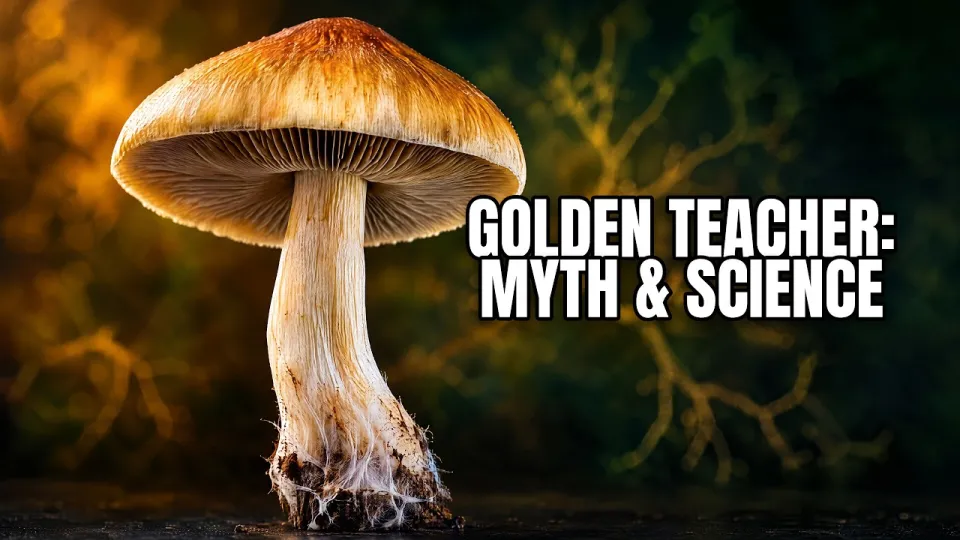
Video: Golden Teacher Mushrooms: Myth, Chemistry & What Science Knows
· based on the channel Shroomverse
What Are Golden Teacher Mushrooms
Golden Teacher mushrooms are a well-known variety of psilocybin-containing psychedelic mushrooms often recognized by their golden caps and distinctive appearance. The name "Golden Teacher" is a community label rather than a formal taxonomic classification, reflecting cultural and anecdotal significance more than strict biological lineage. Despite their popularity in psychedelic communities, the exact origins and scientific classification of Golden Teachers remain unclear, with multiple genetic lineages potentially grouped under this name.
Chemistry and Active Compounds
The psychoactive effects of Golden Teacher mushrooms primarily arise from two alkaloids: psilocybin and its active metabolite psilocin. These compounds interact with serotonin receptors in the brain, particularly the 5-HT2A receptor, modulating perception, cognition, and mood. However, the concentration of psilocybin and psilocin can vary widely between individual mushroom samples due to factors such as growing conditions, substrate, and genetic variation.
Brain Imaging and Psychedelic Effects
Modern brain imaging studies have revealed how psilocybin affects brain networks associated with the sense of self and consciousness. Psilocybin reduces activity in the brain's default mode network (DMN), which is thought to underlie ego boundaries and self-referential thought. This disruption can lead to altered perceptions, mystical experiences, and enhanced emotional processing. However, these effects are linked to the active chemical compounds rather than the mushroom's specific strain or variety.
Myths About Blue Bruising and Potency
A common myth is that the blue bruising seen on Golden Teacher mushrooms indicates higher potency. Scientifically, blue bruising occurs due to the oxidation of psilocin when the mushroom tissue is damaged. While it confirms the presence of psilocin, it does not correlate reliably with the strength or intensity of the psychedelic experience. Potency depends on the overall alkaloid content and individual sensitivity rather than bruising alone.
Clinical Research and Standardized Psilocybin
Current clinical trials investigating psilocybin-assisted therapy use highly purified and standardized doses of synthetic psilocybin combined with psychological support. These studies do not assess whole mushrooms or specific varieties like Golden Teacher but focus on the isolated compound to ensure consistency and safety. This distinction is important because the chemical variability in natural mushrooms means experiences and effects can differ between batches.
Cultural Expectations Versus Scientific Evidence
Golden Teacher mushrooms carry cultural weight as a "teaching" or enlightening tool in psychedelic use, but scientific evidence emphasizes that effects depend on chemistry, dosage, set, and setting rather than the mushroom's name alone. Expectations shaped by community narratives can influence subjective experiences, highlighting the interplay between biology and psychology in psychedelic experiences.
Conclusion
Golden Teacher mushrooms are a culturally significant psilocybin mushroom variety with uncertain taxonomy and variable chemistry. Their psychoactive effects derive from psilocybin and psilocin interacting with serotonin receptors, altering brain network activity related to self-awareness. Blue bruising is a chemical reaction without direct potency implications. Clinical research relies on standardized psilocybin rather than mushroom products. Understanding these mushrooms combines biology, chemistry, and cultural context. This summary is based on the educational documentary by Shroomverse, which delves into myths and scientific knowledge surrounding Golden Teacher mushrooms.
Key takeaways
- Golden Teacher is a popular name for a psilocybin mushroom variety with uncertain taxonomy
- Psilocybin and psilocin are the primary active compounds affecting serotonin receptors
- Chemical composition varies significantly between samples, influencing potency
- Blue bruising indicates psilocin oxidation but does not guarantee strength
- Clinical trials focus on standardized psilocybin, not specific mushroom strains
Source: Golden Teacher Mushrooms: Myth, Chemistry & What Science Knows · Markdown version
Questions & answers
What makes Golden Teacher mushrooms distinct from other psilocybin mushrooms?
Golden Teacher mushrooms are distinguished mainly by their golden caps and cultural significance, but taxonomically they are not a distinct species. Their chemical composition can vary, making them similar to other psilocybin mushrooms in active compounds.
Does the blue bruising on Golden Teacher mushrooms indicate higher potency?
No, blue bruising results from psilocin oxidation when the mushroom tissue is damaged. While it confirms psilocin presence, it does not reliably indicate higher potency or stronger psychedelic effects.
How do psilocybin and psilocin affect the brain?
Psilocybin is metabolized into psilocin, which binds to serotonin receptors, especially 5-HT2A, disrupting brain networks like the default mode network. This leads to altered perception, ego dissolution, and changes in consciousness.
Are clinical studies conducted with Golden Teacher mushrooms?
Clinical trials use standardized synthetic psilocybin combined with psychological support rather than whole mushrooms. This ensures consistent dosing and safety, unlike natural mushrooms which can vary chemically.